Find your fajaFree U.S. shipping on orders $100+

Stage 2 and stage 3 fajas: what to wear after surgery
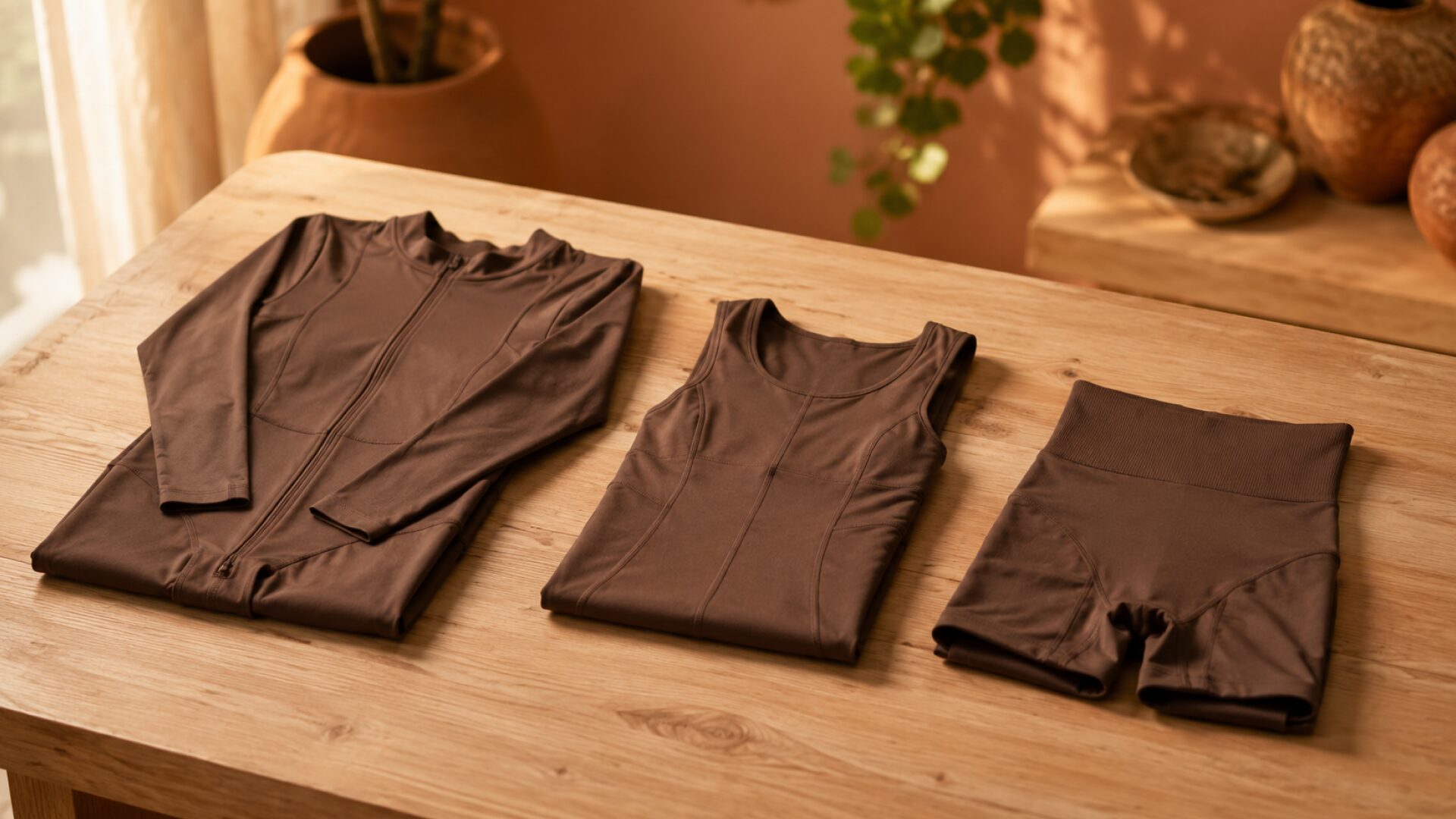
If you've had surgery or have one coming up, chances are your surgeon, your massage therapist or the women in your recovery group are talking to you about stage 2 and stage 3. They're the two fajas you go through as the swelling comes down, after the garment the clinic gives you. In Spanish they're called segunda and tercera etapa, and in Colombia, “posturas.” Here's what each one involves, when it's time for the next, and how to plan so your faja is at your door before you need it, whether you're in Florida, Texas or New York.
Stage, etapa or postura: three names for the same thing
The idea is simple. Right after surgery your body is swollen and sore, and for the first few days you wear the garment the clinic puts on you. Once your surgeon clears firm compression, you move to stage 2, with no boning, so the swelling goes down evenly. Later comes stage 3, with boning, designed to define your waist. And each one comes in two patterns, regular and full-hip fit, depending on how much hip you have for the same waist.
In this guide we use both names together, stage 2 (segunda etapa), because on our product pages you'll see “stage 2” and at your surgeon's office you may hear “segunda etapa.” They mean the same thing.
| Stage | Roughly when | What sets it apart |
|---|---|---|
| First days clinic garment |
The first two weeks | The one your surgeon gives you when you leave the operating room; we don't sell it here |
| Stage 2 segunda etapa |
From week two to month three | No boning, hooks with three settings, so the swelling goes down evenly |
| Stage 3 tercera etapa |
From month three on | Built-in boning that defines your waist |
The timing in this chart is a reference. Your real schedule is set by your surgeon, and two patients with the same surgery can move at very different paces.
Before surgery: measure yourself and order your stage 2
The clinic gives you your first faja on surgery day. Your stage 2 is best to have at home before you need it: a UPS or USPS package takes days, not hours, and your recovery weeks are no time to be watching tracking updates.
Measure yourself before surgery with a tape measure: waist and hips. With those two numbers, find your size in the size guide, which has one chart for regular hip fit and another for full-hip fit, or let Find your faja work it out for you. If your surgeon gave you a specific size, go with that.
The first days: the clinic garment
It's the faja you leave the operating room in, and your surgeon chooses it. Bending over and raising your arms will be hard, so ideally it opens in front with hooks and covers the whole treated area without edges that leave marks. We don't sell that first garment here: your recovery with us starts at stage 2.
It's normal for it to feel tight at first. As the swelling goes down you move to the tighter row of hooks, and once you're closing it on the last row and it's still loose, that's the sign it's time for the next one.
Stage 2 (segunda etapa): when the first one gets too big
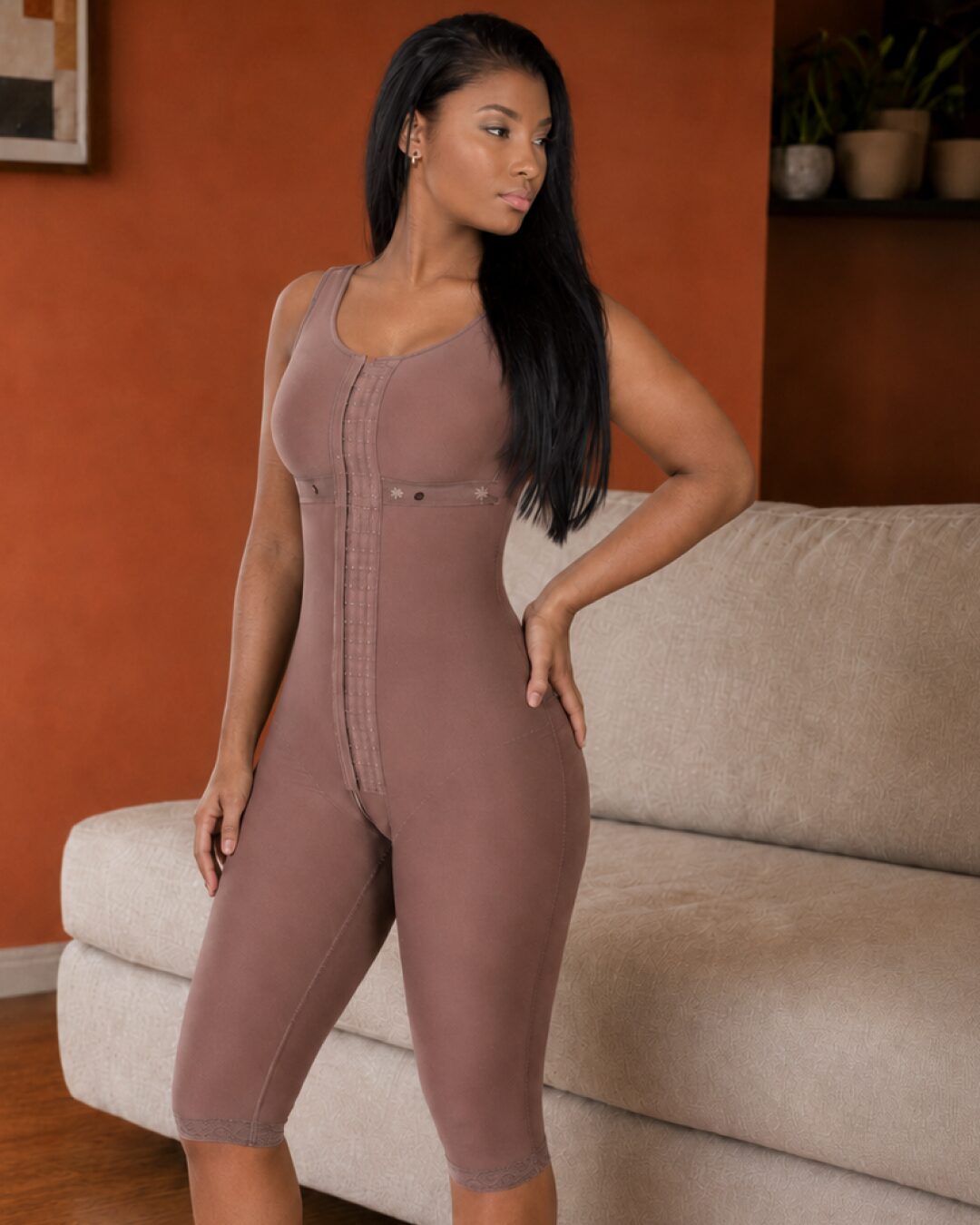
Stage 2 comes when the first faja no longer holds you on the last row of hooks, which usually happens between week two and month three. There's still swelling, but the pain eases and your body can handle firm compression, which is what helps the swelling go down evenly. A stage 2 faja has no boning and hooks with three settings, and your figure starts to show.
What to check when you choose one: that it's snug without leaving deep marks or taking your breath away, that it doesn't roll at the waist or thighs, and that the length matches what you were told. Some styles for this stage:
- Stage 2 knee-length with built-in bra 3040.
- Open-bust stage 2 knee-length 3027.
- Stage 2 mid-thigh with built-in bra 3039.
- Stage 2 knee-length with built-in bra, full-hip fit 3034, if your hips need more room than your waist.
If you had a BBL, at this stage you need a faja with a butt lift that doesn't squeeze your glutes: you'll find them together in BBL fajas.
Stage 3 (tercera etapa): boning to define
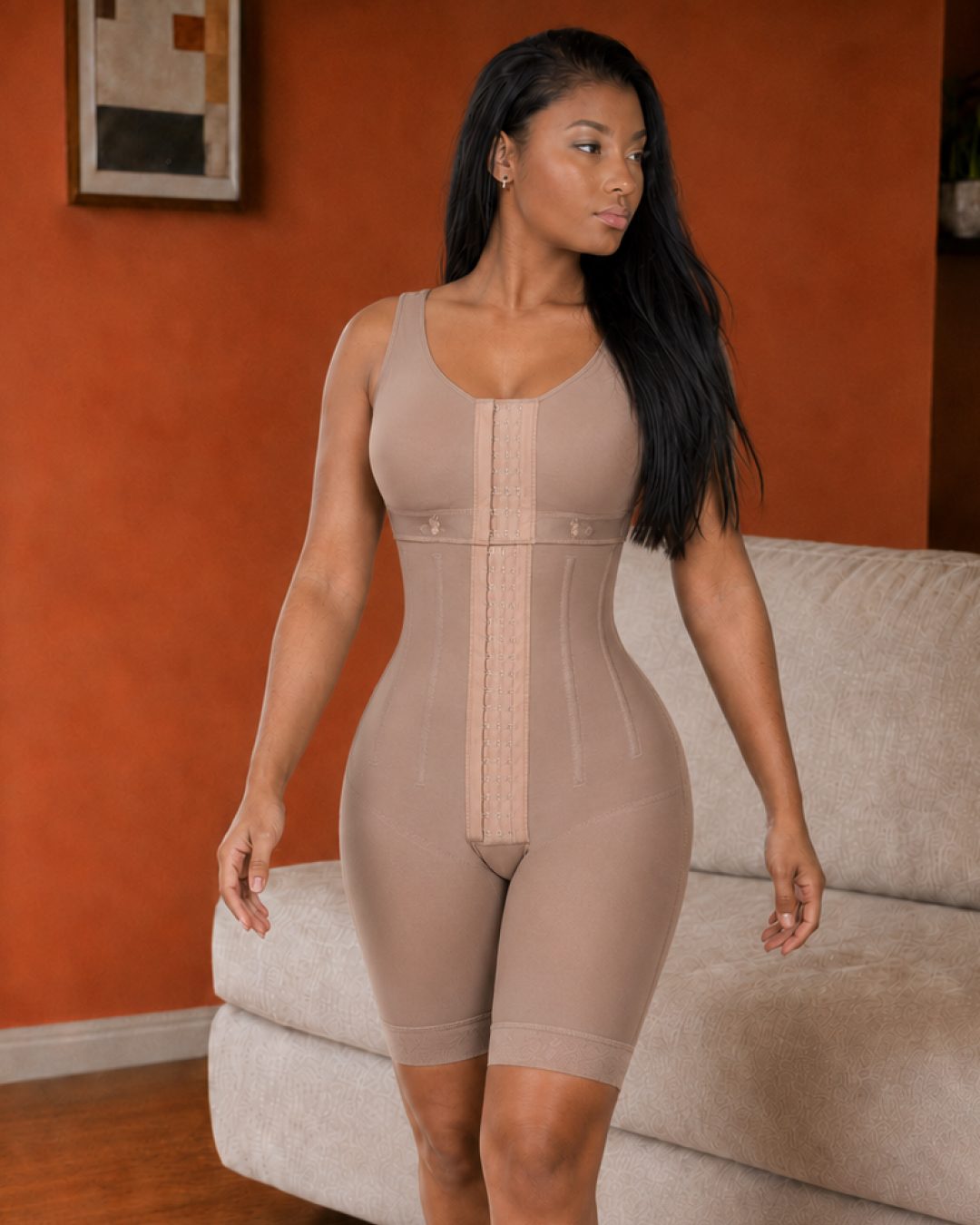
From around month three, your skin has settled and there's barely any pain. Stage 3 keeps the compression high and adds ergonomic boning on the abdomen and back. That boning holds the shape and prevents folds, which is why you usually don't need a lipo board at this stage.
The seven-bone styles differ mainly in length, whether they have a bra, and the hip pattern: the knee-length 3031 and the mid-thigh 2029 are open-bust; the 3012 with built-in bra is knee-length. For a full-hip fit, compare the open-bust 3042 and the 3043 with built-in bra, both knee-length. If you want more structure, see the 2035, a mid-thigh style with nine support stays. The hourglass-shaped ones are grouped together in hourglass fajas.
Stage 3 isn't mandatory. Some women finish their recovery in stage 2 and then switch to a lighter shaping faja for everyday wear.
When to order your next stage if you shop online
The classic mistake is waiting until the faja is completely loose before buying the next one. Days go by between placing your order and the package arriving, and a faja that no longer compresses isn't doing its job. Watch for these signs instead:
- You're already closing it on the last row of hooks and it's starting to feel loose.
- It rides up, rolls or shifts during the day.
- You put it on and barely feel any pressure.
- Your shape has changed and there are areas with extra fabric.
At the first of those signs, measure yourself again and order the next one. When your order ships you get a tracking number to follow your package. Shipping is free on orders $100+; under that, it's $15. The rest is in Shipping.
If you had surgery abroad and you're recovering in the U.S.
It's very common: surgery in Colombia or another country, and recovery here. You usually come back with the first faja the clinic gave you, and you have to get stage 2 and stage 3 once you're home. Before you say goodbye to your surgeon, ask them in writing which stage comes next, in which week, and with what length and compression. With those instructions you can pick your faja here without guessing, and if you have questions later about timing or discomfort, ask them or the doctor following your case in the U.S.
If the size didn't work out
It happens, especially in stage 2, when your body changes fast. That's why it pays to measure before you order: since fajas are intimate items, all sales are final and we don't exchange sizes. If we sent you the wrong style or size, or the faja arrived with a defect, you have 7 days from delivery to let us know, with photos and without wearing it, and we'll make it right at no cost to you. Full details in returns and replacements.
FAQ
Is stage 2 the same as segunda etapa or segunda postura?
Yes. Stage 2 is how it appears on our product pages and how it's said in English; segunda etapa is the Spanish translation, and segunda postura is how it's said in Colombia. All three refer to the same recovery faja.
Can I start directly with a stage 2 faja?
Not without your surgeon's okay. Right after surgery, high compression on a swollen, sore area is uncomfortable, and skipping ahead a stage won't make you recover faster.
How many fajas do I need for each stage?
It's easiest to have two for the stage you're in, because you wear your faja many hours a day and it needs frequent washing. With two, you always have a clean one while the other dries.
How far ahead should I order the next stage?
As soon as you notice you're closing it on the last row of hooks. That way the package arrives before your current faja stops compressing.
Do I have to sleep in my faja?
It depends on your surgery and stage, and your surgeon decides. In the first weeks many surgeons recommend wearing it almost all day, but follow the instructions you were given.
Is stage 3 forever?
No. It's the last stage of recovery, and you wear it for as long as your doctor says. After that, if you like the feel, you can keep going with an everyday shaping faja, but that's optional.
This guide is for information only. When to switch stages, how many hours to wear your faja and what compression is right for you is up to your surgeon, based on your case.
Which stage are you in?
Tell us which surgery you had and where you are in your recovery, and we'll show you the fajas that work for you, with price and size.
 Spanish
 English