Find your fajaFree U.S. shipping on orders $100+

How to wash a Colombian faja without losing compression
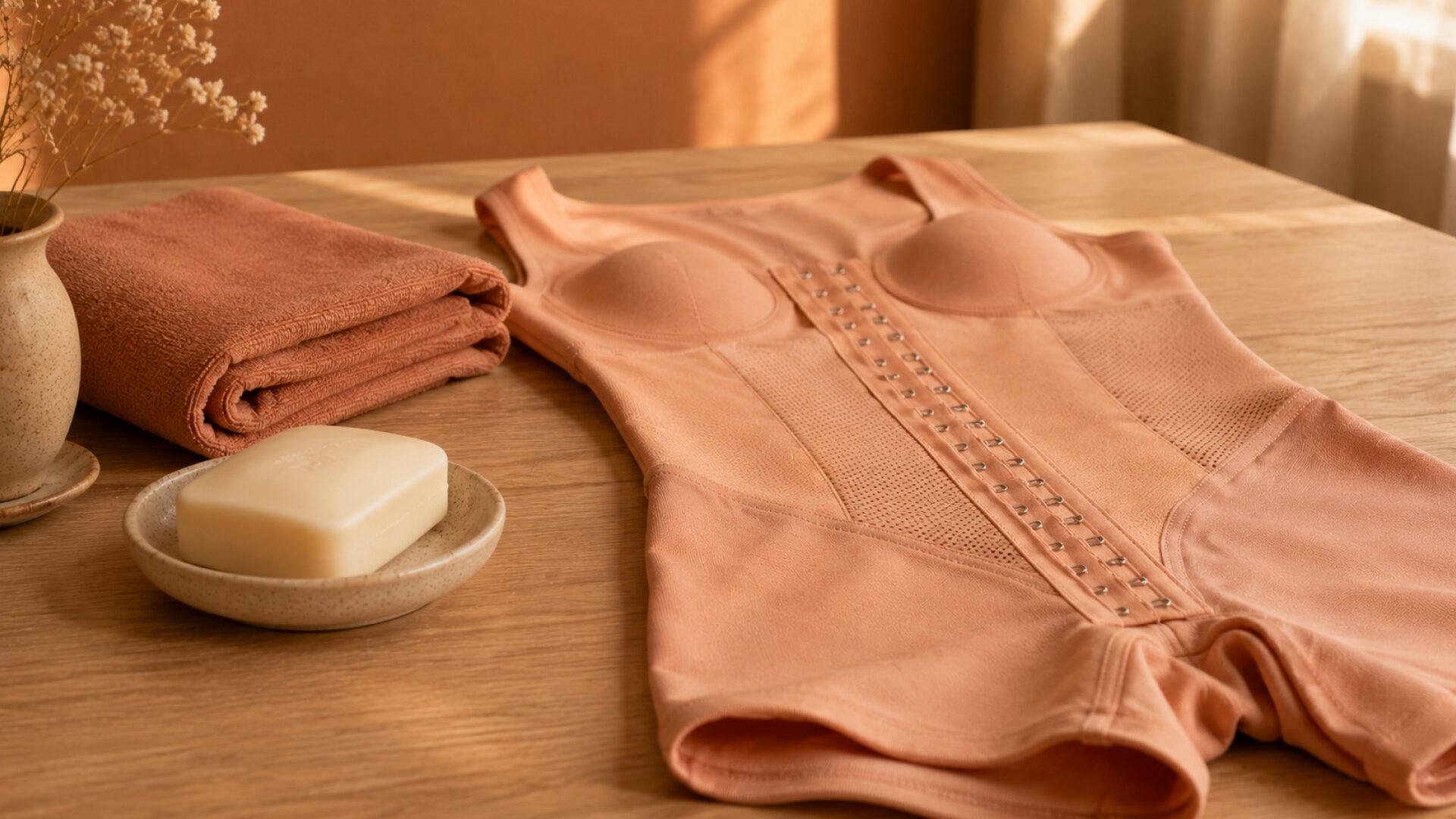
A gentle wash routine is what keeps your faja compressing the way it did on day one. It's tempting to toss it in with everything else, but that's the fastest way to make it lose its compression. What gives a faja its compression is an elastic fabric that breaks down with heat, and a dryer is pure heat. Here's a simple routine to wash, dry and store it, and what to do the day it starts feeling loose.
Why the dryer is your faja's worst enemy
MeliBelt fajas are made of powernet, a fabric with elastic fibers like spandex or elastane. Those fibers are what hold you in, and heat weakens them until they no longer bounce back. On the outside it can look the same, but it doesn't compress the way it did, and there's no fixing that.
That's why the most important rule in this guide is a short one: your faja never goes in the dryer, not on hot and not on “low heat”. Not the laundromat's dryer either.
| Do | Don't |
|---|---|
| Cold water | Hot water or the “hot” cycle |
| Mild soap or detergent for delicates | Chlorine, bleach or harsh stain removers |
| A mesh bag if you use the washer | Liquid fabric softener or dryer sheets |
| Hooks and zipper closed while washing | Dryer, iron or heater |
| Dry it flat, in the shade | Wringing it out |
Hand washing: the gentlest option
It takes just a few minutes and does the best job of preserving the compression:
- Close the hooks and the zipper, if it has one. Left open, they catch on the fabric and tear it.
- Fill the sink or a basin with cold water and dissolve a little mild soap.
- Put the faja in and squeeze it with your hands several times, without scrubbing hard or using a brush. Spend a little more time on the inner lining, which is what soaks up sweat.
- Rinse it with clean water until no more suds come out.
- To get the water out, roll it up in a towel and press. Never wring it: the seams and hooks lose their shape.
If you machine-wash it
By hand is better, but if your week doesn't leave time for that, you can use the washer carefully:
- Put the faja, with the hooks closed, inside a mesh laundry bag for delicates.
- Choose your machine's gentlest cycle, the one labeled “delicate” or “hand wash”, with cold water and a low spin.
- Don't mix it with jeans, towels or anything with Velcro or metal zippers.
- Top-loading washers with a center agitator twist clothes more: with those, the bag is a must.
- Take it out as soon as the cycle ends, instead of leaving it damp and bunched up in the drum.
Drying: air-dry, no rush
Lay it flat on a drying rack or a flat surface, somewhere with good airflow. Don't hang it in strong midday sun, which dries out the elastic almost as much as a dryer, and don't put it on a heater in winter. If you live somewhere humid it'll take longer to dry: plan for that so you're not without a clean faja the next morning.
How often to wash it, and why it pays to have two
A post-surgery faja spends many hours against your skin, so it needs frequent washing: after every wear or every other wear, depending on the heat and how much you sweat. Sweat and skin oils also wear down the fibers if they sit in the fabric for days.
The practical way to wash it often without running out is to have two in the same stage and alternate them. While one dries, you wear the other, and each one gets a rest between wears. You'll find stage 2 and 3 together in post-surgery fajas.
Putting it on and taking it off without forcing it
Many fajas tear while being put on, not while being washed. Hook it starting from the bottom, row by row, without pulling the fabric to one side. If you have to stretch it hard to close it, chances are the size is too small or you're still very swollen, and it's worth checking your measurements in the size guide. To take it off, unhook it all the way instead of tugging it down.
Storing it between wears
Only once it's completely dry, because stored damp it ends up smelling bad. Fold or roll it loosely, in the closet or an airy drawer, and don't leave it under heavy clothes for weeks, because the crease ends up setting into the fabric.
When it starts feeling loose
A faja loosening during recovery isn't always wear and tear: often it means you've lost volume, and that's a good sign. First, move to the next row of hooks. If you're already on the last row and it's still loose, it's time for a size down or the next stage, as we explain in stage 2 and 3 fajas.
Keep in mind that all sales are final: a faja that has gotten too big on you can't be exchanged, worn or not (we explain it on our returns page). What you can do is measure yourself again and order the size that fits you now. And if the fabric is torn, no longer springs back, or the color changed after a bleach wash, replace it: a faja that doesn't compress isn't doing its job.
FAQ
What if I dry it on low heat?
Still no. Even a little heat, kept up for many minutes, takes the same toll on the elastic. Air-dry it, even if it takes longer.
Is my washer's “hand wash” cycle okay?
It's your best option if you're using the washer, always with cold water, a low spin and the faja inside a mesh bag with the hooks closed.
What soap should I use?
A mild soap or a detergent for delicates, just a small amount. Avoid chlorine, bleach and fabric softener, which coats the fibers and weakens them.
Can I take it to the laundromat?
Only if you wash it yourself on a delicate cycle with cold water, then take it home to air-dry. Never put it in the laundromat's dryers.
Why does it smell even after I wash it?
Almost always because it was stored before it was fully dry, or because it isn't washed often enough. Wash it more often, rinse it well and let it dry completely before putting it away.
It got loose. Can I exchange it?
No: all sales are final, worn or not. Try the next row of hooks and, if that's not enough, measure yourself again and order the size or stage you need.
Need a different size or the next stage?
Measure yourself again with the size guide and choose the faja for where you are now.
 Spanish
 English